Budapest, Unbanned? Hungary Scraps Its Anti-LGBTQ Law, and the Work Isn't Done
Hungary has stripped the anti-LGBTQ provisions from its 2021 Orbán-era law. For gay travelers, Budapest goes from think-twice to watch-this-space, but trans recognition, adoption and the Pride-ban law are still untouched.
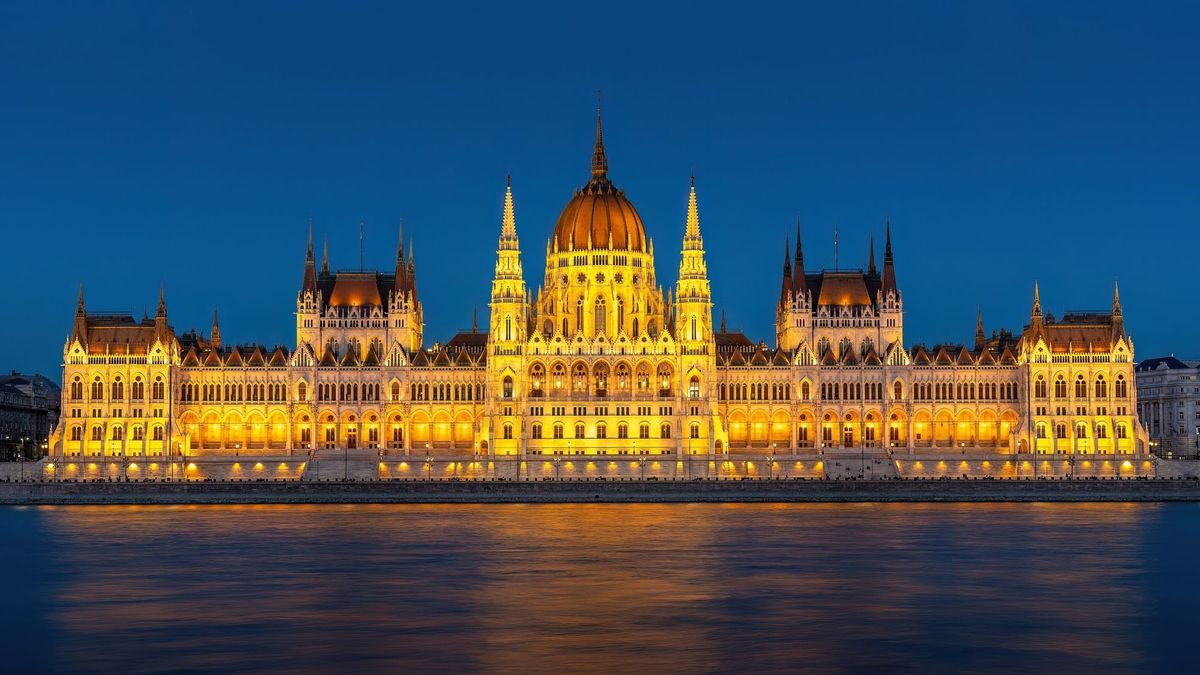
For years, Budapest sat in an awkward spot on the gay travel map: one of Europe's most beautiful capitals, with thermal baths, ruin bars and a Danube skyline built for slow evenings, run by a government that wrote suspicion of LGBTQ people into law. That is starting to change. On October 13, Hungary's parliament voted 139 to 51 to strip the anti-LGBTQ provisions out of the 2021 "child protection" law passed under Viktor Orbán.
It is the most significant rollback of Orbán-era restrictions since Prime Minister Péter Magyar took power in May, and it lands in a week heavy with symbolism. Today, October 23, Hungary marked the 70th anniversary of the 1956 uprising against Soviet rule, with European Commission President Ursula von der Leyen in Budapest. "Six months ago the people of Hungary voted for a new chapter," she said, according to Euronews, "to turn the page on years of division, of trust eroded, freedoms rolled back."
So is Budapest back? The honest answer is: it's promising, not finished.
What actually changed
The 2021 law banned the "portrayal" or "promotion" of sexual and gender diversity in content accessible to under-18s. Critics across the EU said it equated LGBTQ people with a threat to children, and last year the same legislation was amended to serve as the basis for banning Pride marches, France 24 reports. In April, the EU's Court of Justice ruled that the law violated "the very identity" of the bloc.
Under the amendment, the law no longer singles out sexual or gender diversity. Instead it seeks to protect minors from material that can "seriously impair the child's physical, intellectual, emotional or moral development." According to Human Rights Watch, the government's bill removes the restrictions from laws covering child protection, media, advertising and education, and refocuses them on genuinely harmful material such as pornography, exploitation and grooming.
"The fact that restrictions on access to LGBTQ content are being removed is definitely an important and positive step forward," Tamás Dombos of the Háttér Society, Hungary's leading LGBTQ rights group, told AFP.
Why it's not a clean slate
Magyar himself has been careful with the framing. He didn't campaign on LGBTQ rights, and ahead of the vote he presented the changes not as a restoration of rights but as stronger child protection "regardless of sexual orientation," France 24 notes. He also said the move brings Hungary in line with EU rules.
And a lot of the Orbán architecture is still standing. Rights groups point to several pieces that the bill left untouched:
- Trans recognition. Since 2020, Hungarian law has barred legal recognition of transgender people's gender identity. That hasn't changed.
- Adoption. Same-sex couples still can't adopt.
- The constitution. HRW says the bill doesn't address discriminatory language in the Fundamental Law, including Article XVI, which it describes as the constitutional basis for anti-LGBT restrictions.
- The assembly law. Restrictions in the Freedom of Assembly Act, which were used to try to prohibit Pride, remain on the books.
- Family Protection Act. HRW flags that section 5/A, which contains similar content restrictions, was left unchanged in the government's bill.
"There is still a lot to do," Dombos said. "Even if the government's sole aim is to restore the legal status quo that existed before 2020, there are still a great many laws that would need to be amended ... and we don't know whether the government's working on that."
The governing Tisza party holds a two-thirds majority, so it has the votes to go further if it wants to. HRW's verdict: "the government needs to finish what it started."
The Pride test, already passed once
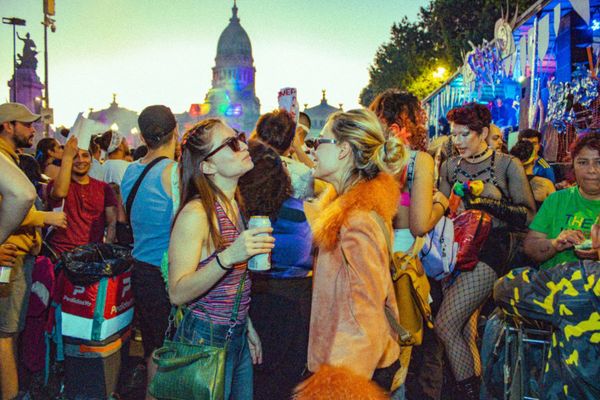
The clearest signal for visitors came in June. The 31st Budapest Pride march on June 27 was the first since Orbán was voted out, and AP reported tens of thousands of people marching from the Opera House across the Elizabeth Bridge in record-breaking heat. A year earlier, the government had tried to ban the event outright; organizers say at least 350,000 people marched anyway.
That's the shift in a sentence: a year ago, showing up was an act of defiance. This year, it was a party.
What it means for travelers
For gay travelers, Budapest moves from "think twice" to "watch this space." The day-to-day experience for a visitor, a couple holding hands on Andrássy Avenue or a long soak at the baths, was never governed by the content law in the first place. What changes is the tone from the top, and the legal climate for the people who live there.
A few practical notes:
- Plan around Pride. The Budapest Pride festival builds to its march each June and closes with the Rainbow Party at Budapest Park, which organizers bill as the country's biggest LGBTQ party. Watch their site for 2027 dates.
- Trans and non-binary travelers should know that Hungary still doesn't legally recognize gender identity for its own citizens. That doesn't change the rules for visitors' documents, but it is a fair read on where the law still stands.
- Spend with intention. Seek out queer-owned bars, community events and local LGBTQ organizations. The groups that held the line through the Orbán years are the ones pushing for the next round of reforms.
- Keep an eye on parliament. The real tell will be whether the government touches the constitution or the assembly law. If it does, Budapest goes from promising to genuinely welcoming.
Seventy years after Hungarians took to the streets for freedom, the country is reopening some doors that had been shut. Not all of them. But for the first time in a long time, the direction of travel is the right one.